Dad’s Traditional 24-Hour Beef Pho: Twelve tips for the best twenty four hour broth!
The Way We’ve Always Made It
There are a lot of phở recipes out there — and most of them skip the parts that actually matter.
This is the 24-hour beef phở my dad made every weekend when I was growing up. He’d start it on Friday, let it slowly simmer all day Saturday, and by Sunday morning the entire house smelled like phở!
He always said phở isn’t about doing more. It’s about doing the right things in the right order — and knowing when to stop touching the pot.
Phở comes from northern Vietnam, where ovens weren’t common and roasting bones was never part of the process. Cooking was done over open flames.
That’s why traditional phở starts with boiling bones, not roasting them.
Roasting creates deep, browned flavors through the Maillard reaction — great for ramen and Western style stocks — but phở isn’t meant to taste roasted. Phở broth should be clean, clear, and layered, with sweetness slowly pulled from bones and aromatics over time.
And that’s also why real phở takes time. Twelve hours is good. Twenty-four hours is better — because proper extraction can’t be rushed.
Why Vietnamese-Sourced Spices Matter
Phở is only as authentic as the spices that go into it. Many blends use spices sourced from all over the world, but the flavor profile changes depending on where those spices are grown, harvested, and dried.
In Vietnam, spices like star anise, cassia cinnamon, and coriander are cultivated in a climate and soil that give them a softer sweetness and warmer aromatics. They’re less sharp, less aggressive, and better suited for long, gentle simmering. That’s the flavor my dad grew up with, and that’s the flavor we aim to preserve.
Our phở spice kits are built using mostly Vietnamese-sourced spices, blended the way my dad learned it — balanced, restrained, and meant to support the broth, not dominate it.
We also include rock sugar, a small amount of MSG, and mushroom powder because traditional phở isn’t afraid of umami. Rock sugar adds a clean, rounded sweetness. MSG enhances savoriness without changing the flavor. Mushroom powder deepens the broth naturally without weighing it down. Used properly and added at the end for authentic tasting beef pho.
Why Raw Beef Cooks in the Bowl
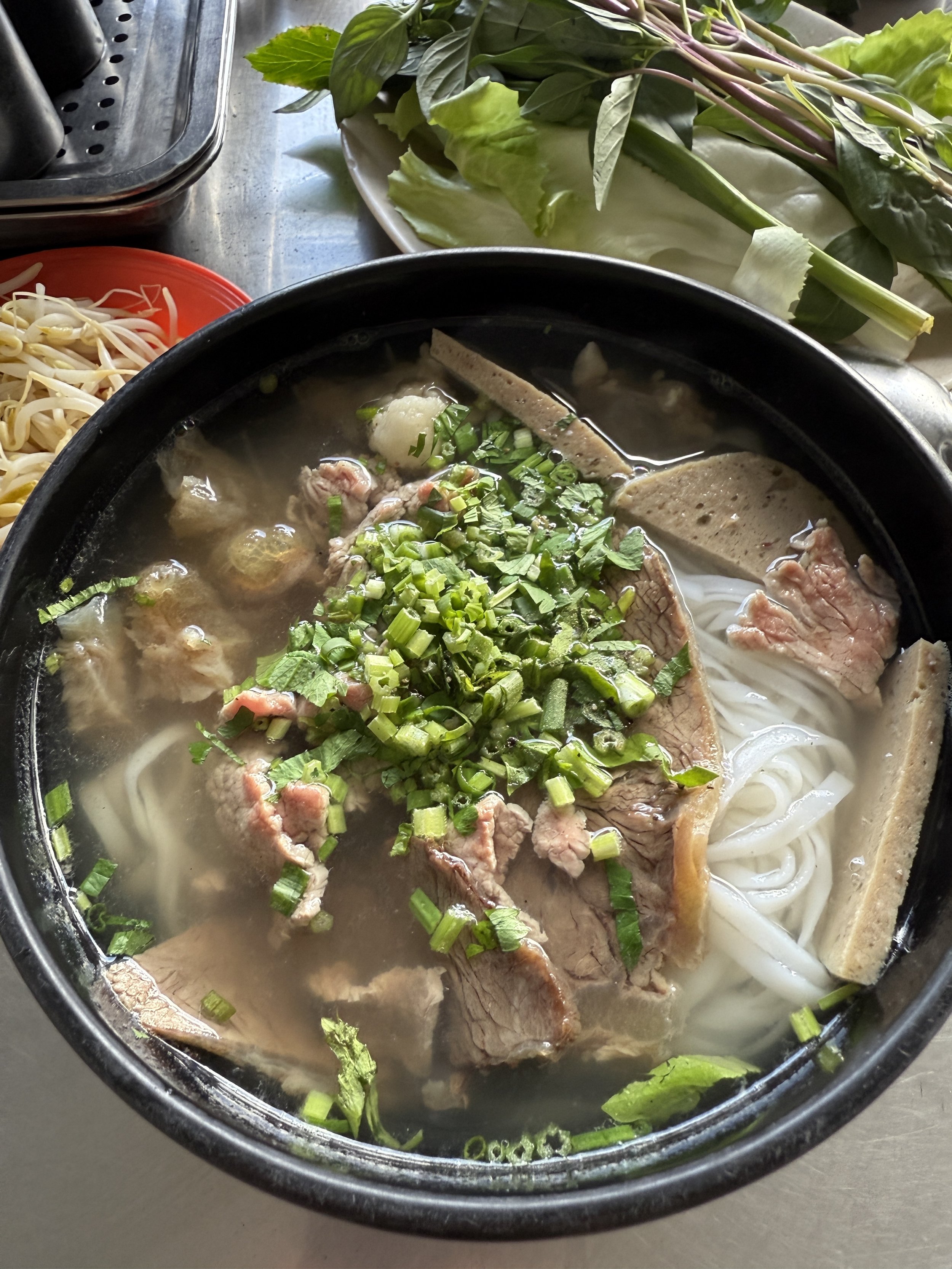
Traditional phở is served with thinly sliced raw beef, and the cooking happens in the bowl. This is how it works:
Phở broth is typically served at 190–205°F (just below boiling)
Beef sliced paper-thin cooks almost instantly at temperatures above 140°F
When the hot broth hits the cold meat, heat transfer is immediate
Because the slices are so thin, they fully cook through in seconds — gently, without tightening or drying out. This method preserves tenderness and keeps the beef delicate, which is exactly how phở is meant to eat.
*Please note: This is our family recipe using the exact ingredients we cook with at home. The Amazon links below show the products we personally use, and all measurements, and flavor notes are based on those specific brands.
Dried sandworm “Sa Sung” (*optional)
MSG from Dad’s Spice Kit
Beef phở stock powder (*optional, for “quicker” pho)
1 Pho Spice Sachet / kit (spice kit) from Dad’s Spice Kit
Dad’s Pho Spice Kits
My dad’s phở spice kits are built the way we actually use them at home. You’re not just getting whole spices — you’re getting two spice bags for layering flavor (makes 2 separate pots of pho or one XL pot), plus the key seasonings most people forget: rock sugar, mushroom powder for depth, and a touch of MSG for that clean, savory finish.
Most of the spices are sourced from Vietnam, so when that broth starts steaming and hits your face, you get that familiar aroma — the one that instantly tells you this is real phở. It’s balanced, traditional, and designed to give you that clear, deeply fragrant broth without guessing.
Help Support My Page
If you’ve enjoyed our pho recipes and want to see more, your support means everything. Every purchase helps launch Dad’s new beef pho spice kits — and you’ll get early access when they’re ready to order. If you can’t grab a packet right now, no worries — check out our free pho guide and YouTube video below for our top 10 best tips and tricks.
Digital Product:
A complete guide and recipe for crafting authentic Northern-style 24 hour beef pho — including our full list of tips and tricks for a flavorful, crystal-clear broth.
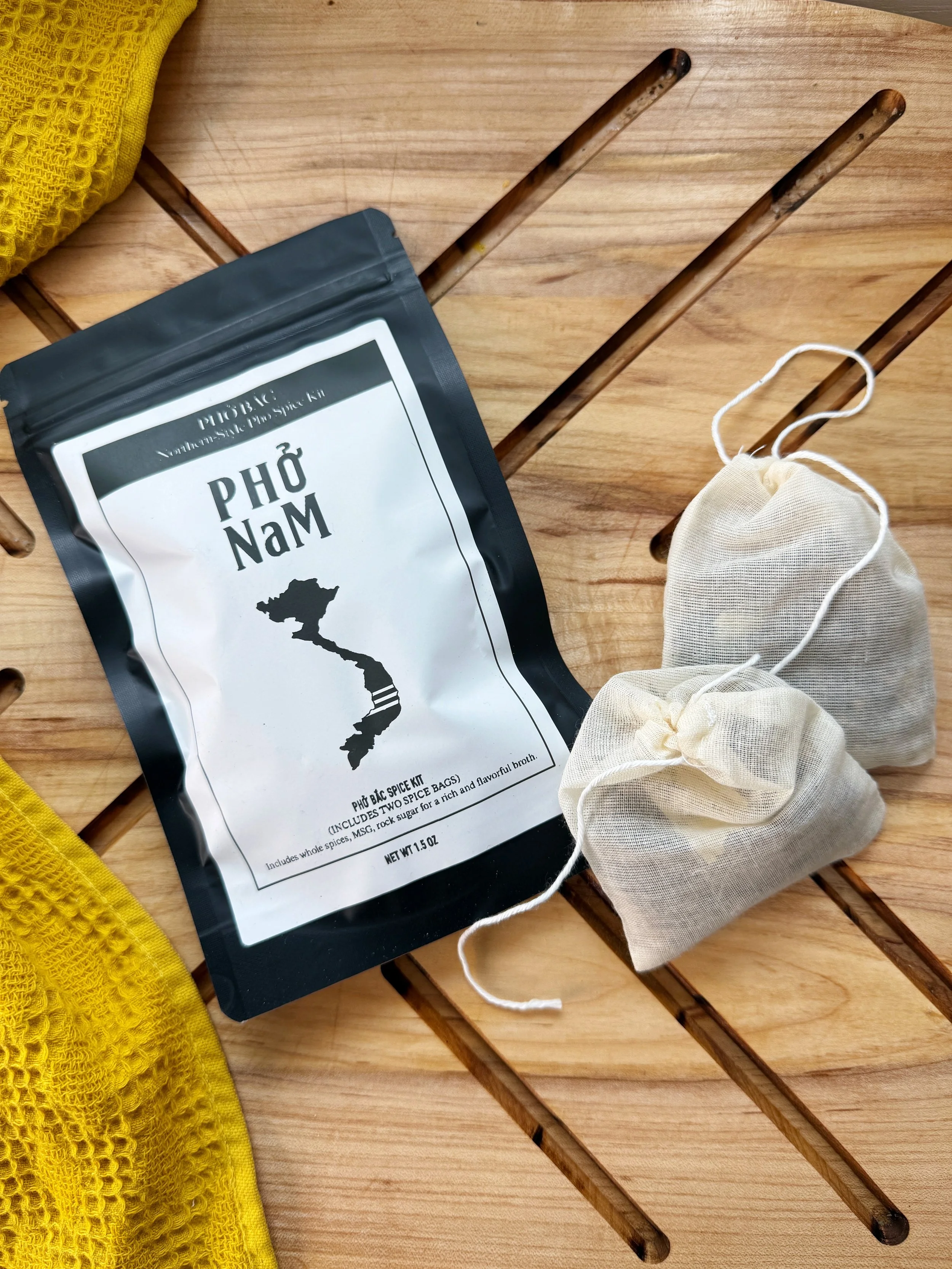
Dad’s Pho Spice Mix:
This kit includes almost everything you need to make a beef pho: 2 spice bags, rock sugar, optional MSG, and mushroom powder.
Not Sure What Style of Phở You Like? Northern Phở vs Southern Phở
Southern Phở
Most phở spots in the U.S. serve the Southern-style version—richer, sweeter, and full of bold spices like star anise, fennel, and cinnamon. It’s the one that comes with a side plate piled high with herbs, lime, bean sprouts, hoisin, and chili sauce—built for customization and big flavor.
Northern Phở
Northern phở, on the other hand, is what you’ll find in Hanoi. It’s more restrained, clean, and clear. The broth is all about purity—letting the beef and bones shine. There’s no fennel, no cloves, less cinnamon, and just a hint of spice. Instead of dressing it up, some vendors add depth with fire-charred ginger, grilled onions, and even dried sea worms (sa sùng) for natural umami. No extra herbs, no sweet sauces—just balance in every sip.
12 Important Tips For Making Authentic 24-Hour Phở!
These are the rules my dad followed every single time:
Knuckle bones should always be used, along with a few bones that still have a little meat attached, because the knuckles provide body and natural gelatin while the meat contributes sweetness and depth without overwhelming the broth.
The pot should be filled completely to the top at the beginning of the simmer, and no water should ever be added again, because adding water later dilutes everything you worked for and throws off the balance of the broth.
The broth should be kept at a low, steady simmer for twelve to twenty-four hours, never a rolling boil, because slow heat pulls sweetness from the bones, keeps the broth clear, and allows flavors to develop naturally over time.
Bones should be skimmed continuously during the first hour only, because this is when impurities rise, and after that the pot should be left alone since excessive skimming later stirs sediment back into the broth.
Onions, ginger, and shallots should be charred until their skins blister and darken, then lightly rinsed, because charring adds sweetness and aroma while rinsing prevents bitterness from entering the broth.
Charred aromatics should be added during the last four hours of simmering, not at the beginning, so their sweetness and fragrance stay bright instead of cooking out over a full day.
Daikon should be added to the pot because it contributes a clean, subtle sweetness and helps keep the broth tasting light and clear as it simmers.
Mushroom powder should be used sparingly and added toward the end of cooking, because it adds depth without weighing the broth down, and adding it too early can flatten the flavor.
Sá sùng, if you can find it, should be included for traditional northern-style phở, because it adds a natural umami and gentle sweetness that’s difficult to replicate with anything else.
The phở spice packet should go into the broth only during the final thirty to forty-five minutes of cooking, because extended simmering dulls the aromatics and clouds the broth instead of enhancing it.
Fish sauce and rock sugar should always be added at the very end, once the broth is fully extracted, because seasoning early locks you into a flavor you can’t correct later and risks sacrificing clarity and balance.